
Unified communications
Plan and move business phones and meetings: Microsoft Teams Phone, SIP trunking, call routing and number porting, cut over in agreed windows.
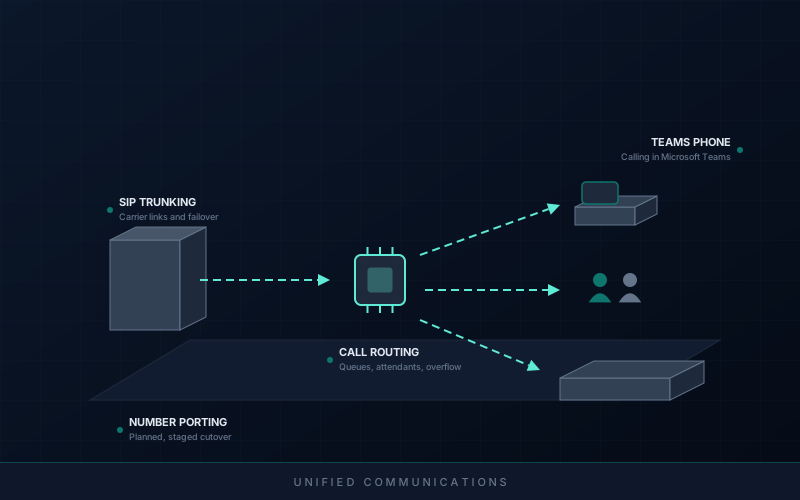
What we review
- Current-state review: Numbers, carriers, call flows, auto attendants, queues and devices as they exist today.
- Teams Phone design: Calling plans, Operator Connect or Direct Routing, policies and user assignment.
- SIP trunking: Carrier options, session border controller placement, capacity and failover routing.
- Call routing: Auto attendants, hunt groups, call queues, business-hours schedules and overflow paths.
- Contact centre and voice platforms: Queue design, agent assignment and integration with the calling platform in use.
- Meeting rooms: Room devices, accounts, licensing and a consistent experience across rooms.
- Number porting planning: Inventory, carrier requirements, sequencing and fallback if a port is delayed.
- Emergency calling: Location information, dispatchable addresses and how calls from remote or mobile users are handled.
Deliverables
- Voice inventory: Every number, route, queue and device, with owner and purpose recorded.
- Target design: The chosen calling model, carrier approach and routing, with the reasoning stated.
- Call flow diagrams: Readable maps of how calls reach people, including after-hours and overflow.
- Porting and cutover plan: Sequenced steps, carrier dependencies, staff communication and rollback.
- Emergency calling configuration notes: How location is captured and what was tested.
- Administration guide: How to add users, change routing and manage numbers after handover.
Engagement boundaries
- Work is carried out during Canadian business hours. There is no round-the-clock monitoring, on-call rota or staffed operations centre. Cutovers are scheduled for agreed windows.
- Carrier port timelines are set by the carriers involved; a plan can sequence around them but cannot control them.
- Call quality depends on your network and internet connections. Where these are the cause, that is reported rather than worked around silently.
- Emergency calling behaviour is configured and tested with you, but final responsibility for accurate location information sits with the organization and its carriers.
- Telephony contracts and carrier pricing are yours to negotiate; comparisons are provided as input, not as a reseller.
- Hardware procurement and physical installation of room devices are not included unless scoped in writing.
- End-user support for handsets and headsets is not included unless scoped in writing.
- Changes are made with your approval and through your change process, not unilaterally.
- This work is technical advice and implementation, not legal or regulatory advice on telecommunications obligations.
Questions before the work starts
Will our phones stop working during the move?
The aim is that callers notice nothing. Numbers are ported in planned batches with the old system still in place, cutovers happen in agreed windows, and each batch has a fallback if a carrier port is delayed or fails.
Should we use Teams calling plans, Operator Connect or Direct Routing?
It depends on your number count, existing carrier contracts, locations and how much control you need. The design stage compares the options against your situation and recommends one, with the reasoning written down.
How is emergency calling handled for remote staff?
It needs deliberate configuration. Location information has to be captured and kept current, and the behaviour for home and mobile users has to be tested. We set this up with you and document what was tested, but accurate addresses remain the organization's responsibility.
How is this priced?
By agreed scope, written down before work begins. A review and design is a bounded piece of work; migration effort depends mostly on the number of sites, numbers and call flows involved.
What happens after the cutover?
You receive the documentation and administration guide, and old systems are retired once they carry no traffic. Ongoing administration can continue under a managed IT or retained arrangement if you want it, but it is not required.
The platforms this work covers
Voice and meeting work covers the platforms and carriers your calls actually run through.
- Microsoft Teams Phone
- Operator Connect and Direct Routing
- SIP trunking providers
- Session border controllers
- Teams Rooms and meeting room devices
- Contact centre and cloud voice platforms
- On-premises PBX systems
Audits available
- Call flow review: auto attendants, queues, hunt groups, schedules and overflow paths, mapped and checked against intent.
- Number and carrier inventory: every number, carrier, contract and route, with owners and porting readiness recorded.
- Emergency calling review: location information, dispatchable addresses and behaviour for remote and mobile users.
Other ways we can help
Engagements are often scoped together; these are the closest neighbours to this one.
Planning a phone system change and want it to be uneventful?
Book a free initial consultation. Share roughly how many numbers and sites you have, what system and carrier you use today, and what is driving the change. The reply will outline a realistic sequence and what the first stage would involve.